
On fibre-optic installation sites, the microtrenching technique is preferred to traditional methods because it is less invasive, faster to carry out and saves backfill material, requiring just one fifth of the quantity needed to fill trenches dug with a mini excavator and trenching wheel.
Job completed in 2 hours
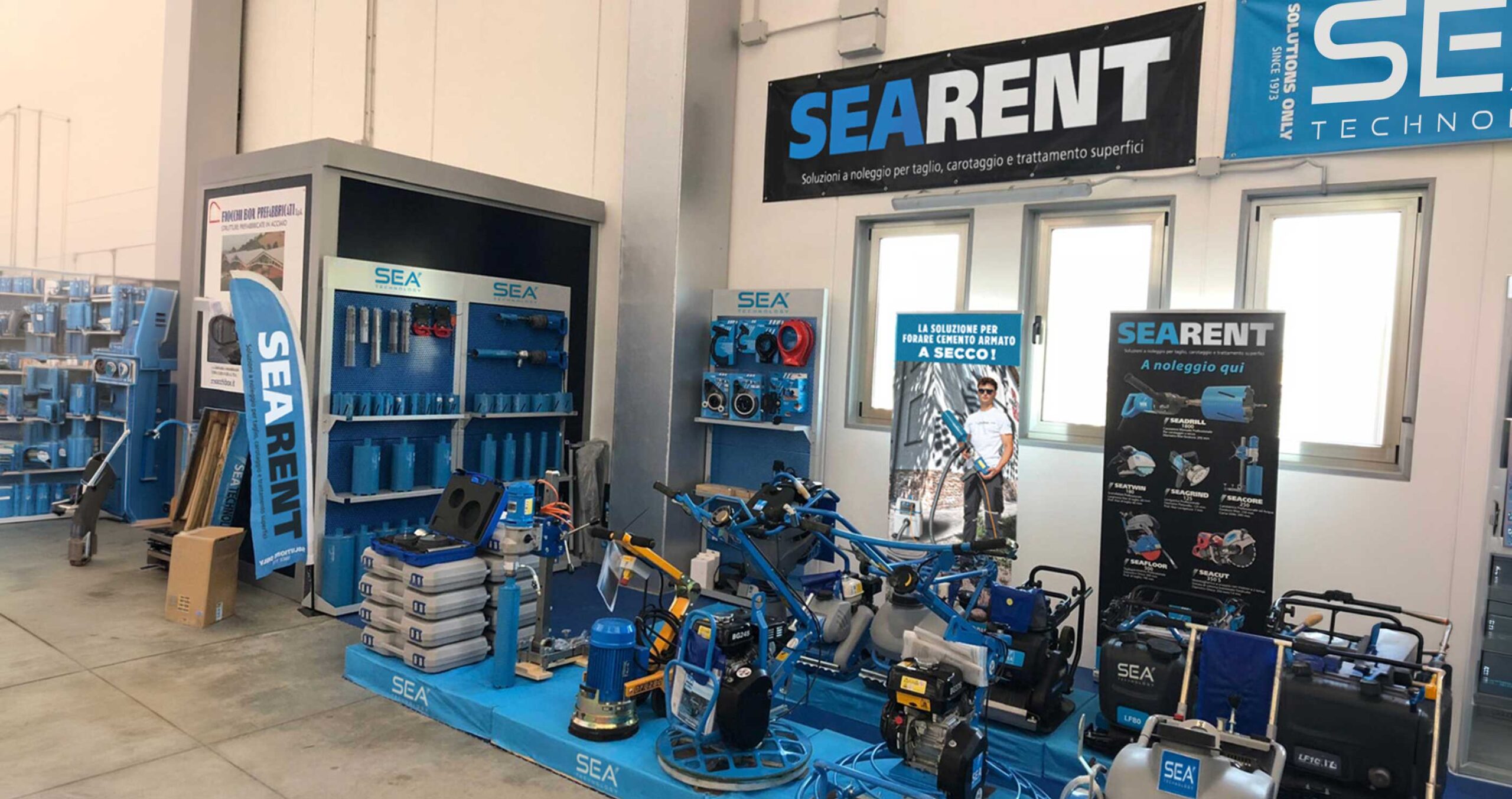
To master this technique, Sea Technology has developed the SEAFLOOR 501 floor saw which, just a few months after its launch, has proved highly successful with dealers and contractors. Many operators have chosen to pair it with the grooving blade with a 500 mm diameter and 20 mm cutting width, or the 450 diameter version with a 15 mm width, both suitable for the purpose. Fibre-optic ducts are in fact 14 mm in diameter and can easily be inserted into a 16 mm wide microtrench.
With this equipment, a couple of hours’ work is enough to set the machine down on the ground (the dedicated handle makes loading and unloading from the van and moving the machine easier), cut the microtrenches, lay the ducts and close the trench.
Strategic considerations
Investing in a fibre-optic cutting system that is complete, yet versatile enough to be used in several applications, makes sense for a number of reasons.
First of all, the spread of fibre optics – Fiber To The Cabinet (FTTC), Building (FTTB) and Home (FTTH) – which still has significant room for growth in Italy.
Then there are the excavation techniques used and the type of machines available, which determine the number of sites a company can work on. Working in the traditional way requires mini excavators and trenching wheels, as well as large quantities of admixed concrete to fill the trenches.
Next, tool life: trenching wheels work dry and, unless they are kept constantly cool, risk having a very short life of just 20-30 metres of use.
Timing is also important: with microtrenches the job can be completed in 2 hours for distances of 20 metres; with traditional excavation, at least 4 hours’ work are needed for the same distance, plus transporting the equipment and setting up the site.
And of course, the budget: the cost of a “traditional” site (from hiring the mini excavator with trenching wheel to the tipper truck for transport) is comparable to the purchase cost of the Sea Technology solution.
These are aspects that should be carefully considered by all companies wishing to seize the opportunities offered by this expanding phase of the market.
For further information on our solutions for fibre-optic sites, contact Sea Technology’s distributors throughout Italy, or contact us to be put in touch with the agent nearest to you.